
INTRODUCTION.
In an era where the planet’s feverish pulse driven by unchecked greenhouse gas emissions threatens the very rhythms of life we hold dear, international frameworks like the United Nations Framework Convention on Climate Change (UNFCCC), the Kyoto Protocol, and the landmark Paris Agreement of 2015 (which entered into force in 2016) stand as beacons of collective resolve. These accords, bolstered by updated Nationally Determined Contributions (NDCs), compel nations to curb global temperature rises and slash atmospheric GHG concentrations. Nigeria, a nation whose fortunes have long been tethered to fossil fuels, reaffirmed its bold pledge at the 28th Conference of the Parties (COP28) in the UAE in 2023: net-zero emissions by 2060. Yet, as we navigate this pivotal juncture in 2025, the journey feels profoundly human and not just a policy checklist, but a story of resilience amid scarcity, where communities dream of cleaner skies while grappling with the shadows of economic dependency.
Contrast this with the blue economy, that ancient, whispering expanse of ocean covering 70% of Earth’s habitable surface, a realm older than humanity itself and brimming with untold treasures. Astonishingly, despite the global technological prowess from satellite mapping to deep-sea drones, only about 5% of the oceans have been charted, leaving 95% as a vast, enigmatic frontier. Of the 226,000 known marine species, the unplumbed depths promise revolutions in medicine, food security, and energy. For Nigeria, with its 853-kilometer coastline and exclusive economic zone spanning 200 nautical miles, these twin imperative: energy transition and blue economy intersect in ways that could redefine our national narrative. This paper delves into Nigeria’s regulatory responses, weaving in contemporary challenges and opportunities, to illuminate not just the mechanics of policy, but the human stakes: livelihoods preserved, ecosystems healed, and futures unlocked.
CONCEPTUAL CLARIFICATIONS
Energy Transition
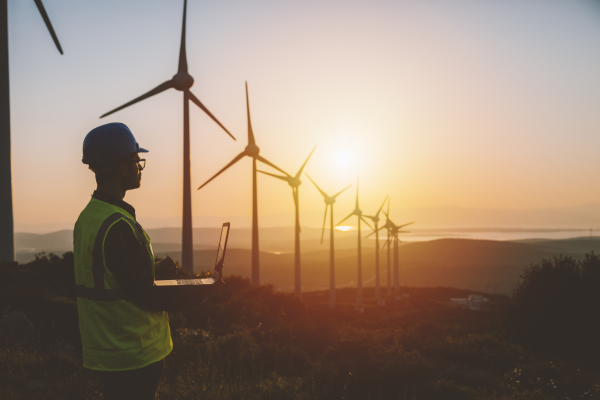
At its heart, the energy transition is humanity’s pivot from the brittle embrace of fossil fuels oil, gas, and coal to the boundless promise of renewables like solar, wind, and lithium-ion batteries. It is more than a technical shift; it is a profound reconfiguration of how we power our world, demanding we confront the ghosts of industrial excess while forging paths to sustainability. As scholars Lazar D. Gitelman and Mikhail V. Kozhevnikov articulate, it encompasses the evolution toward low-carbon models, integrating co-generation of energy and heat, and decentralizing supply systems closer to end-users. Echoing this, Robert-Jan Geerts frames it as a philosophical and practical exodus from finite, polluting regimes to clean, climate-neutral renewables, a journey whose endpoints shimmer like mirages, defined not by rigid maps but by the North Star of net-zero emissions.
Yet, this transition is no uniform odyssey. For affluent nations of the Global North, it may unfold with the luxury of established infrastructure; for Nigeria, it is a steep, shadowed ascent. The financial toll alone is staggering: an estimated $1.9 trillion required by 2060, including $410 billion beyond baseline expenditures equating to roughly $10 billion annually in a economy grappling with a nominal GDP of $440.8 billion (or $1.117 trillion at purchasing power parity, ballooning to $2.109 trillion per alternative estimates). Globally, McKinsey’s calculus pegs the price tag at $9.2 trillion yearly through 2050, totaling $275 trillion, a sum dwarfing the U.S. GDP by 13-fold. As of 2025, Nigeria’s updated Energy Transition Plan (ETP) refines this vision, targeting 277 GW of installed capacity by 2060 with heightened renewable integration, grid modernization, and natural gas as a pragmatic bridge fuel, yet it underscores the multidisciplinary labyrinth of implications, from supply chains to social equity. Imagine families in rural Nigeria, long sidelined by flickering kerosene lamps, now envisioning solar-powered homes: the transition is as much about hope as horsepower.
Blue Economy
Coined by visionary economist Gunter Pauli, the blue economy evokes a harmonious dance between human ingenuity and oceanic abundance, decoupling growth from depletion. The Centre for the Blue Economy distills it elegantly: the oceans’ economic imprint, their ecological stewardship, and their role as a growth engine for both wealthy and emerging economies. Anchored in three pillars economic vitality, social equity, and environmental integrity.It aligns seamlessly with UN Sustainable Development Goal 14: “Life Below Water.” For Nigeria, this is no abstract ideal. The 2023 establishment of the Ministry of Marine and Blue Economy under President Bola Ahmed Tinubu marked a watershed, spotlighting potentials worth N7 trillion domestically and a slice of the global $1.7 trillion annual bounty or Africa’s projected $296 billion through 2063, per the African Union’s Africa Blue Economy Strategy.
The AU’s blueprint categorizes opportunities vividly: maritime transport and ports (scaling from 500 million to 2 billion tons by 2063), sustainable fisheries (capping at 10 million tons to thwart overexploitation), aquaculture ($2.77 billion valuation), blue energy, deep-sea mining, oil and gas (African majors eyeing $100–140 billion GDP growth), coastal tourism (from $80 billion in 2018 to $138 billion by 2063), and blue carbon sequestration. Tourism alone rivals oil revenues, a poignant reminder that Nigeria’s coastal communities, fishers mending nets at dawn, tour guides weaving tales of mangrove lore hold keys to diversification. In 2025, the Ministry’s freshly unveiled 10-year National Blue Economy Strategy and four-year implementation plan amplify this, prioritizing port upgrades (including a $1 billion Lagos overhaul), sustainable investments, and innovative financing to eclipse oil as the revenue vanguard. Here, the blue economy humanizes progress: not distant boardrooms, but empowered women in aquaculture co-ops, feeding nations while nurturing seas.
CONTEMPORARY ISSUES IN ENERGY TRANSITION AND THE BLUE ECONOMY IN NIGERIA
The energy transition, for all its promise, is laced with thorns that prick at Nigeria’s core vulnerabilities. Beyond the chasm in technological maturity between Global North and South, where solar farms bloom in deserts while our grids sputter, we confront a tapestry of hurdles en route to net-zero by 2060. Consider these pressing shadows:
a. Energy Security and Transition Pace: Swapping the lifeblood of a $100 trillion global economy for unproven renewables risks blackouts in the interim. Energy’s immutable laws neither creatable nor destructible demand we bridge, not burn, bridges; natural gas’s expanded role in the 2025 ETP update nods to this realism, curbing flaring while averting chaos.
b. Financial Colossus: The $275 trillion global levy, or Nigeria’s quadruple GDP burden ($410 billion for clean energy alone), strains like a fault line. In 2025, as NDC 3.0 crystallizes commitments through 2035, the quest for $10 billion annual infusions feels like Sisyphus’s eternal push exacerbated by oil price volatility and post-pandemic fiscal scars.
c. North-South Schism and Polluter Pays: The Global North’s historical emissions cast long shadows, yet their “silence” on reparative justice echoes hollow. Nigeria’s ETP champions equity, but without Loss and Damage funds materializing, the divide festers, fueling debates on just transitions.
d. Mineral Dependencies: Renewables’ green halo dims with surging lithium and copper demands, birthing new extractive frontiersand ethical quandaries in Africa’s heartlands.
The blue economy, too, navigates tempests that mirror our shared fragility:
a. Maritime Menaces: Piracy, oil theft, and smuggling exacerbated by Gulf of Guinea insurgenciesrepel investors and researchers, throttling exploration.
b. Climate’s Marine Onslaught: Warming oceans acidify habitats, bleaching corals and starving fisheries; Nigeria’s coastal erosion displaces thousands, intertwining blue woes with transition imperatives.
c. Overexploitation: SDG 14 warns against it, yet illegal, unreported, and unregulated (IUU) fishing pillages stocks; the Ministry’s 2025 pledges target this head-on.
d. Pollution’s Poison: Plastics and spills ravage biodiversity, from mangroves to migratory birds, a human toll in poisoned fish plates.
e. Governance Gaps: The creation of Marine and Blue Economyy Ministry is a stride forward, but institutional silos persist; the new Strategy seeks cohesion.
f. Untapped Enigma: With 95% oceans unexplored, monetizing potentials demands bold and advanced Rresearch and Ddevelopment to explore the vast ocean to be able to achieve the targets.
These issues, interwoven, reveal a deeper truth: Nigeria’s path demands not just policy, but empathy for the fisher whose nets are empty, and the engineers innovating amid blackouts.
REGULATORY INTERVENTIONS ON ENERGY TRANSITION AND THE BLUE ECONOMY.
The regulatory interventions of the Nigeria government in the energy transition within the policy framework are stated as follows: National Energy Policy, which was revised in 2018 with 13 chapters that harmonised the policies for sub-sectors of the energy sector with the overall objective of providing clean, affordable, adequate, and reliable energy; The Nigeria Energy Transition Plan of August 12, 2021; the National Energy Masterplan 2014; the National Climate Change Policy for Nigeria 2021–2030; National Adaptation Strategy and Plan of Action on Climate Change in Nigeria (NASPA-CCN) 2011: National Renewable Energy and Energy Efficiency Policy. (NREEP) 2015; National Gas Policy of 2017; National Biodiversity Strategy and Action Plan (NBSAP) 2016; National Forest Policy (NFP) 2010; National Forestry Action Plan (NFAP) 1996; National Policy on Environmental 2016; Nigerian Agricultural Policy 2001; Agricultural Promotion Policy (APP) 2016–2020; National Climate Change Policy and Response Strategy (NCCPRS) 2012; National Policy on Drought and Desertification (NPDD) 2007: Great Green Wall for the Sahara and Sahel Initiative National Strategic Action Plan (GGWSAP) 2012; National Agricultural Resilience Framework (NARF) 2013; National Health Policy (2016); National Water Policy (2012); National Transport Policy (2016) Nigeria Industrial Revolution Plan (2014) National Gender Policy and REDD+ Strategy, 2019. These are the policy interventions of the Nigerian government on energy transition. The primary laws on energy transition are the Climate Change Act, 2021, and the Electricity Act, 2023.
For the blue economy, statutes form a sturdy keel: 2007 NESREA Act, 2004 Sea Fisheries Act, 2006 NOSDRA Act, 2004 Oil Terminal Dues Act, 2021 Petroleum Industry Act, 2004 Oil in Navigable Waters Act, 2004 EIA Act, 2004 National Water Resources Act, 2007 Merchant Shipping Act, 2003 Cabotage Act, and the 1999 Constitution (as amended). Agencies like NIMASA, NSC, NPA, and NIWA under the new ministry underpin operations. Though the 2023 Ministry lacks a bespoke policye xisting laws deemed sufficient for successful take off and sustainability of the blue economy in Nigeria. . A dedicated Blue Economy Act, akin to energy’s framework, would fortify this nascent sector.
CONCLUSION
The threads of energy transition and blue economy entwine in Nigeria’s regulatory fabric, illuminating pathways to resilience amid global flux. Yet, as ever, our Achilles’ heel lies not in law’s paucity, but in its faithful, equitable enforcement. As 2025 unfolds with ETP refinements and blue strategies igniting, let us remember: these are not mere documents, but lifelines for generations, urging us to steward our inheritance with the wisdom it deserves.
Leave a Reply